VIDEO TUTORIALS, TOOLS & TEMPLATES
Welcome to the toolbox for Tonemasters





What is a business plan?
Basically, business foundation is a company’s vision / mission /idea /core areas. Expresses what business areas or industres the company is in and what it can offer its customers.
What is a market description?
Market description: The description of your typical customer. Who are your typical customers – core target group(s). Geographical demarcation of the customers – in which area do you expect to be able to attract customers? Realistic number of customers? What is a realistic/necessary number of customers per month per year?
Which people should participate in the preparation of the business plan?
Of course you have to participate in the work yourself, but the best person to assess the summary is an outsider who has not been involved in the preparation of the business plan. Preferably a person with a very critical sense who can delete all accepted talk. So when you have made the business plan, please get an external person to criticize it.
What is the business model?
The business model describes the company’s finances and its organization. Thus, your business model should describe what value the company delivers, to which customers, how this value is created, and what the company achieves by delivering the value to customers.
What is the difference between business model and business plan?
A business plan describes the company’s goals and the funds needed to carry out the planned development, where the business model will typically form part of the business plan.
What three types of business are there?
Companies can be divided into three different types:
What companies are there?
Types of companies:
• Sole proprietorship. A sole proprietorship is a personally owned business that is characterized by:
• Personally owned small business (PMV)
• Stakeholder company (I/S)
• Limited company (ApS)
• Entrepreneurship company (IVS)
• Limited company (A/S)
Types of Companies:
• Partnerships and limited partnerships.
• A.m.b.a, s.m.b.a, f.m.b.a – companies with limited liability.
• Foundations.
• Associations.
• Employee investment companies.
Which form of company should I choose?
You must choose the type of business that fits the personal risk you are comfortable with. In general, it applies to the different forms of company that it is the company that is liable if, for example, you go bankrupt. You are personally liable if you have a personally owned business.
What is the difference between A/S and ApS?
ApS’s big brother is called A/S. The main difference is that, where a limited liability company must have a capital contribution of DKK 50,000, an A/S requires a full DKK 500,000. The limited company is owned by shareholders who own shares in the company from the foundation.
What is the difference between a sole proprietorship and an ApS?
An ApS is a company, whereas a sole proprietorship is a personally owned business. Overall, the difference is that as a sole proprietor you are personally involved in the business with your personal finances.


What does an A and R do at a record label
A&R stands for Artist & Repertoire. In short, it means a person in charge of artists and their repertoire (music catalogue) – most often on a record label.
An A&R is tasked with helping and coaching the artists musically with e.g. record production, choice of tracks and single releases, but also acts as support to artists regarding visual identity, partnerships, campaigns and choice of marketing channels. In addition, an A&R also assists with promotion and marketing tasks.
What is a Foil Artist/Artist?
A Foley artist includes the recording and processing of sounds such as doors opening and closing, wind, rain, and car horns, to name a few. Foley artists are used by filmmakers to add exaggeration and humor to a scene.
What features does a sound master have on a film production?
The sound engineer on a film production designs the soundtrack, plans and directs recording, and reworks audio for the film and/or television program.
What is the objective – behind the goal?
An objective is a specific and motivating description of something that one, you or a group of people like to achieve in relation to the target groups
What can a clear objective be?
Specific: The objective is formulated clearly, well-defined and delimited, so that everyone is aware of what is being referred to and what is to be achieved. Clarifying questions in terms of making a goal specific might be: What do we want to achieve? – Why? Who is the target group?
How do you set goals?
If you, the firm, the group of people, are to achieve the set goals, it is important that the goals are described in a motivating way. A good way to make motivational goals is to write all the benefits on a list. Whether you, the congress, the event formulate a dream sentence, make a list of benefits or something else entirely, be specific. Please also describe what it will be like when you, the project is at the finish line.
What is the difference between goals and objectives?
The project’s objective can be divided into objectives, objectives and success criteria. The purpose expresses why the project is being initiated. The goals tell what the project must lead to – partly the visible end products of the project. The goals are thus the essential justification for starting the project, and they are the guiding principle for the project work.
What is a target hierarchy?
A goal hierarchy is a method that can be used to create an overview and connection between the different goals and the activities needed to achieve your goal. A goal hierarchy is thus a good method to create a visual overview of the process required to reach the goal.
Why make a target hierarchy?
The purpose of setting up a target hierarchy is that you get a clear and distinct overview of how the objectives, goals and activities the project are interconnected. The exercise is an effective method for creating agreement on purpose and goals in strategic planning and separating the concepts from each other.
What is a success criterion - effect description?
The success criteria describe the impact we want from the project. It is a way of measuring whether we achieved the purpose and made the difference we wanted. Use the tool which describes ways to sharpen the success criteria and describe the desired effect.
What does it mean that the goals must be operational?
In other words, a goal is an expression of a desirable future state. Operational goal also in projects, applications and sponsorship contexts will say that it is: concrete and realistic.
What is a utility goal?
The project or your project has a specific purpose that contains two types of goals: 1. product goals: the concrete result of the project. 2. Utility goal: that is the end goal that the product goal must fulfill.
What is the difference between qualitative and quantitative measures/data?
Qualitative data collects information that seeks to describe a subject rather than measure it. Think about impressions, opinions and views. A qualitative questionnaire is less structured: it seeks to delve deeper into the subject to obtain information about what motivates people, their thinking and attitudes.
Quantitative methods, in contrast to qualitative methods, emphasize the collection of larger amounts of “hard” data, i.e. information that can be immediately measured and quantified. They are often categorized using statistical methods and the results are often presented numerically.
It is appropriate to be able to refer to both qualitative and quantitative data and targets in the application and sponsorship work.
What is the purpose of a stakeholder analysis?
The stakeholder analysis is carried out to ensure that the project’s objectives, goals and success criteria are attractive to the most important stakeholders, so that the stakeholders see an advantage in the project being carried out.
Why is a stakeholder analysis important?
The purpose of a stakeholder analysis is to give the project manager and the project team an overview of people who have an interest in the project. It must also help create a plan for handling these stakeholders throughout the project.
When do you do a stakeholder analysis?
The stakeholder analysis is therefore done in such a way that you:
Can identify possible resource persons for the project. Can identify and handle possible opponents of the project and handle conflicts during the project. Can create an appropriate communication strategy.
What is a SWOT analysis?
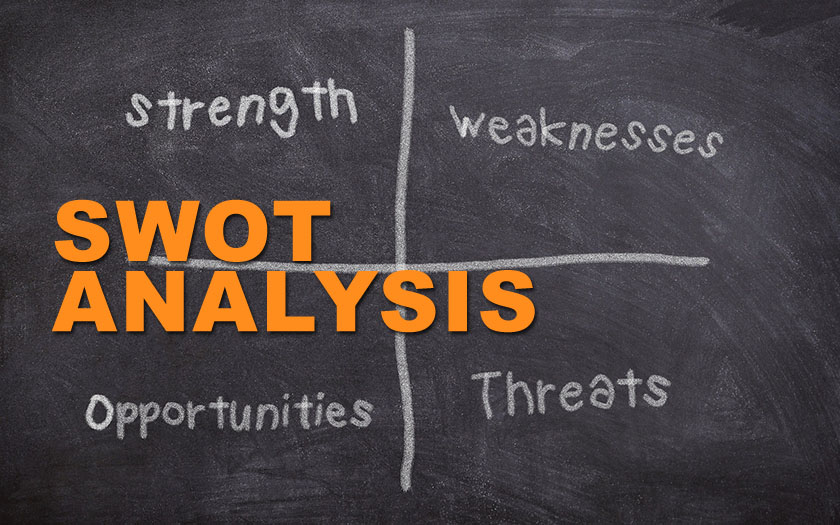
The title of the well-known method comes from the English terms: Strengths, Weaknesses, Opportunities & Threats. The analysis focuses on internal and external factors as well as positive and negative factors that influence the company or project.
How to use a SWOT analysis?
Precisely, you must enter the following in the four different fields:
Why is it important to prepare the SWOT analysis before determining the strategy?
By preparing a SWOT analysis, you get an illustrated overview that can help your company through various challenges, and you can uncover new development and/or growth opportunities. With SWOT, you draw up a snapshot of the company’s strengths and weaknesses, as well as opportunities and threats